Guides
How to Store Paper Rolls Without Curl or Moisture Damage
Store paper rolls without curl by matching your warehouse to the local humidity swing, stacking rolls on dunnage, and letting cold rolls temper before unwinding.
What to take away
- Curl is a moisture gradient, not a defect. A roll that sits in 25% RH air and then feeds into a 55% RH press room will fight you for the first 200 feet.
- US mills ship standard widths of 8.5, 11, 17, 22, 25 and 34 inches for cut-size and narrow web work, and 40 to 60 inch jumbo rolls for wide format. Width decides whether you store on end or on the roll's side.
- The usable band for most offset and digital stocks is 45% to 55% relative humidity at 68 to 75 F, held within a few points day to night.
- Cold rolls need tempering. A roll pulled from a 40 F dock in a Minneapolis January needs 24 to 48 hours indoors before the wrapper comes off.
- The recovery for a curled roll is reconditioning in a humidity chamber or a wrapped rest, not more tension at the infeed.
What you need before starting
You need a hygrometer you trust, not the wall gauge from 2009. A calibrated data logger that records temperature and RH every 15 minutes costs roughly $40 to $150 and tells you the overnight swing, which is the number that actually causes complaints.
You need dunnage. Rolls stored on bare concrete wick moisture through the bottom layer. Pallets, 2x4 runners or plastic roll cradles keep the paper off the slab. The National Park Service conservation guidance for paper-based materials recommends stable conditions and buffered storage, which is the same principle at industrial scale (NPS Conserve O Gram 11-01).
You need a floor plan that separates receiving from conditioning. A roll that goes from truck to press in an hour is a curl complaint waiting to happen, and the fix costs nothing but space.
The sequence
- Log the truck. Note the outside temperature and the roll temperature on arrival with an infrared thermometer. Anything below 55 F goes to the tempering area, not the press.
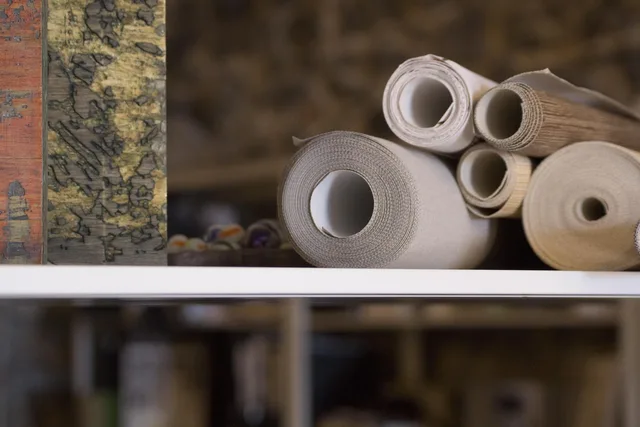
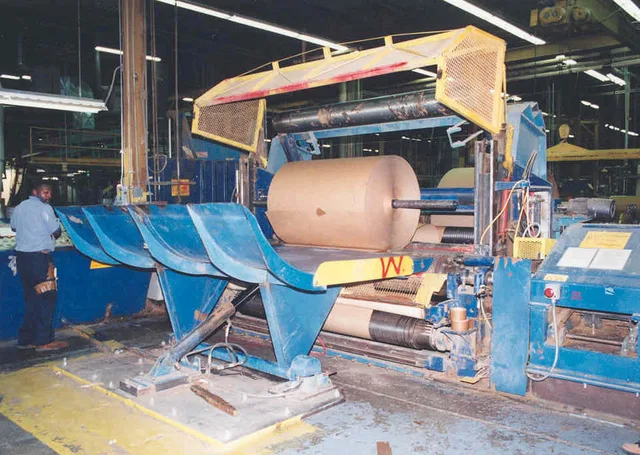
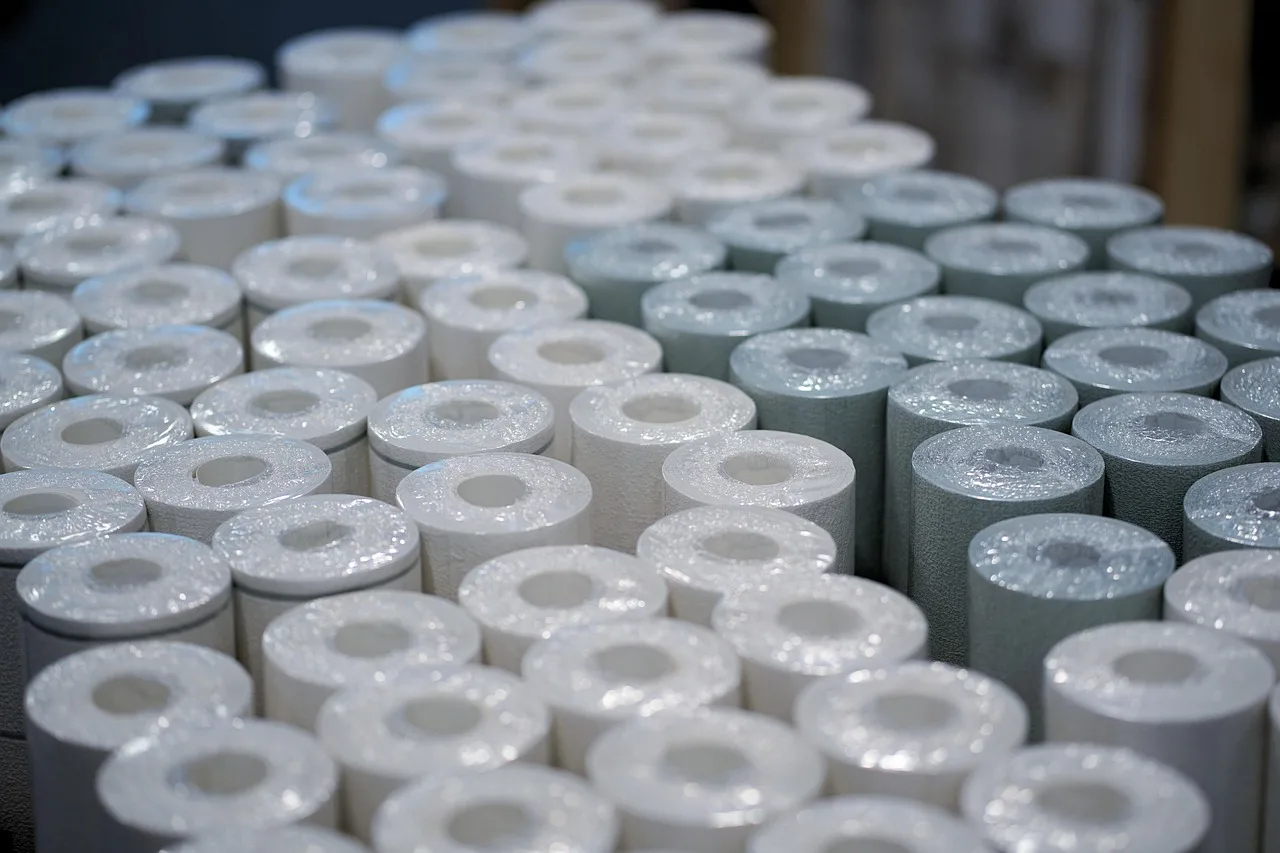
- Stage on dunnage. Set rolls on end for widths under 25 inches, on their side in cradles for jumbo rolls. Never let a roll rest directly on concrete or against an exterior wall.
- Let it temper. Give cold rolls 24 to 48 hours in the press room before unwrapping. A wrapped roll equalizes slowly, which is what you want.
- Check the wrapper. Open the end and feel the outer wraps. Cool to the touch and stiff means more time. Room temperature and limp means ready.
- Condition the press room. Hold 45% to 55% RH. In Phoenix, that means adding moisture. In Seattle, it means removing it. The two cities need opposite equipment, which is why a single supplier answer rarely fits (Phoenix and Seattle humidity guide).
- Rotate stock. First in, first out. A roll that sits six months at the back of the rack takes a set that no amount of press tuning removes.
- Rewrap partials. A half-used roll left open overnight loses moisture at the exposed face and gains it at the core. Wrap it, tape it, and stand it on end.
Where judgement replaces the recipe
Relative humidity is temperature dependent, so a room at 50% RH and 60 F holds far less water than the same 50% at 78 F. If your building swings 15 degrees overnight, chase the dew point, not the percentage.
Roll width changes the answer. Narrow rolls under 17 inches dry from the edges fast and curl at the tail. Wide rolls hold a gradient across the web and show it as wavy edges on the first lift.
Coated stocks are less forgiving than uncoated. A coated sheet that takes on moisture will mottle before it curls, so watch print density as an early warning.
How to tell it is right
Cut a two-foot strip from the outer wrap and lay it on a flat table. It should lie flat within a minute, with no lift at the corners and no arch along the length. That is the measurable test.
The sensory test is the hand. A conditioned roll feels neutral, neither cool nor clammy. If the wrapper fogs when you peel it in a warm room, the roll is still cold.
Run a test signature before the job. Twenty sheets through the press will show register drift and tail curl long before a full run wastes stock. If the sheets stack flat and the edges stay square, you are done.
Fixing it when it is not
Curl that survives conditioning is usually a storage failure, not a press problem. The named recovery is reconditioning: rewrap the roll loosely, stand it on end in a 50% RH room for 24 to 72 hours, and re-test the strip. Do not add infeed tension to flatten a curled web. That stretches the sheet and shows up later as misregistration.
A roll that curled in storage will curl again on the next job unless the room changed. Fix the room, not the roll.
If the whole bay is out of band, the building envelope is the problem. Dock doors propped open, a failed dehumidifier, or a roof leak over the rack will do it.
Sprinkler-protected storage areas follow their own layout rules under NFPA 13. Water damage from a head discharging over paper is a total loss (NFPA 13).