Guides
The cost of print shop equipment, new and second-hand
New against used print equipment costed properly: the ownership items that outlive the purchase price, and an inspection protocol before any machine is bought.
What to take away
- Print shop equipment, new and second-hand, comes down to cost per productive hour, not the invoice. A new Xerox Versant 280 typically lists around $80,000 to $120,000; a used one often sells for $25,000 to $55,000.
- A used machine is a bet on support, not on age. A well-kept old press with a local engineer beats a newer one nobody can fix.
- Count the cost in hours the machine will not run. Downtime on the constrained machine is the expensive part, and it does not appear on any invoice.
- Inspect against a written protocol, with someone independent of the seller, and inspect it running.
- Installation, guarding and chemical handling obligations apply the same to both. Buying used does not buy an exemption.
What new and second-hand print shop equipment actually differ on
Set the sticker price aside and the comparison is about five things.
New vs Used: Five Differences
New
- Support
- Warranty, factory coverage
- Parts
- Current supply chain
- Consumables
- Bundled, minimum commitment
- Condition
- Known
- Installation
- Usually included
Used
- Support
- Local engineers, parts
- Parts
- Real risk, check first
- Consumables
- Open, may be alone
- Condition
- Unknown until inspected
- Installation
- Yours to arrange
What new and second-hand differ on
New
- Support
- Warranty, factory-trained coverage, defined response
- Parts
- Current supply chain
- Consumable terms
- Often bundled into a service or click agreement with a minimum commitment
- Condition knowledge
- Known
- Installation
- Usually included and specified
- Typical price
- A new Xerox Versant 280 typically runs $80,000 to $120,000; a Canon imagePRESS C710 $70,000 to $150,000
Used
- Support
- Whatever local engineers still know the machine and whatever parts still exist
- Parts
- The real risk, and it is worth checking before the price is discussed
- Consumable terms
- Usually open, which can be cheaper or can mean you are on your own
- Condition knowledge
- Unknown until inspected, and sellers describe machines generously
- Installation
- Usually yours to arrange, and the rigging is not trivial
- Typical price
- Used Versant 280s often sell for $25,000 to $55,000; used imagePRESS C710s $20,000 to $60,000
Notice that four of the five ownership items are about what happens after the machine arrives. That is the shape of this decision.
Cost the ownership, not the purchase: typical prices for named presses
Build the comparison over a period you intend to keep the machine. Put both options through the same terms.
Ownership Cost Terms
- Acquisition, delivery, rigging, electrical
- Installation, commissioning, lost output days
- Service contract or call-out rate
- Consumables and click charge minimums
- Expected downtime as lost hours
- Resale value and ease of moving
Typical U.S. prices, as of 2026, before delivery and installation:
Typical prices for named presses
| Machine | New, typical | Used, typical | What moves the price |
|---|---|---|---|
| Xerox Versant 280 digital press | $80,000 to $120,000 | $25,000 to $55,000 | Configuration, finishing, click contract, meter |
| Canon imagePRESS C710 | $70,000 to $150,000 | $20,000 to $60,000 | Speed, paper range, optional finisher |
| Ricoh Pro C5300s | $60,000 to $120,000 | $15,000 to $45,000 | Controller, scanner, service history |
| Konica Minolta AccurioPress C4080 | $60,000 to $110,000 | $18,000 to $45,000 | Duty cycle, inline finishing, location |
| HP Indigo 3550 | Discontinued new; comparable 7xxx series $250,000 to $500,000 | $30,000 to $70,000 | Ink and blanket support, consumable contract |
| Heidelberg Speedmaster SM 52 four-color | $250,000 to $450,000 for a comparable new SX 52 | $35,000 to $90,000 | Impression count, year, coating, delivery |
| Komori Lithrone L428 | $350,000 to $600,000 | $60,000 to $150,000 | Automation, console, age, cylinders |
| Ryobi 524 | Discontinued new | $25,000 to $70,000 | Number of units, spray powder, register |
| Duplo DC-646 slitter/cutter/creaser | $35,000 to $50,000 | $12,000 to $25,000 | Module count, knife condition, firmware |
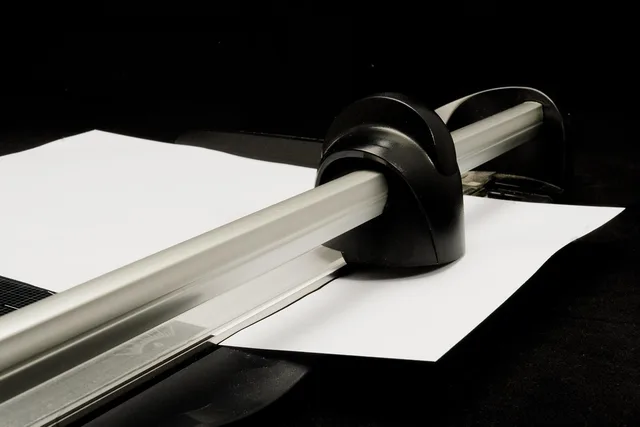
| Polar 115 cutter | $30,000 to $80,000 | $8,000 to $30,000 | Size, program, spare knives, safety updates |
Now run both options through six ownership terms:
- Acquisition, including delivery, rigging, and any electrical or air work the site needs. A used Heidelberg Speedmaster SM 52 often sells for $35,000 to $90,000; a new four-color SX 52 can run $250,000 to $450,000 before delivery.
- Installation and commissioning, plus the days of lost output while it is installed and the operators learn it. New presses usually include it; used rigging typically costs $2,000 to $8,000 for a small press and $10,000 to $30,000 for a large offset machine.
- Service, whether that is a contract, a call-out rate, or an engineer you retain informally. New digital press service contracts often run $0.01 to $0.03 per click or $1,500 to $4,000 per month. Used machine call-out rates typically run $150 to $300 per hour plus parts.
- Consumables under the terms attached to that specific machine. For a digital press that means the click charge and any minimum. Color click charges typically run $0.01 to $0.05 per page; offset plates typically run $5 to $15 each.
- Expected downtime, priced as hours lost on the constrained machine rather than as a repair bill. A shop with a $120 per hour cost rate loses $4,800 in a 40-hour week. This term separates the two options and is the one most often left out.
- What it is worth at the end, and how easily it can be moved on. A machine nobody supports is difficult to sell for the same reason it was cheap to buy.
The cost per productive hour that falls out of that comparison is the number to decide on. It is also the number that feeds the pricing floor, so it is worth getting right once. The machine commitments underneath it are set out in what a press obliges you to run.
An inspection protocol for a used machine
Never buy a machine you have only seen switched off. Work this in order, and take someone who does not benefit from the sale.
Used Machine Inspection Order
- Get meter, maintenance and service records
- Call the servicing engineer, ask if they will continue
- Check parts availability before going further
- See it run on your stock at your speed
- Time a changeover and makeready yourself
- Inspect register, sheet and waste bin
- Check guards, interlocks and emergency stops
- Confirm power, phase, air, extraction, floor
- Ask for the meter reading, the maintenance records and the service history, and check that the records describe the machine in front of you.
- Ask who has serviced it and call them. Their willingness to keep servicing it after it moves is the single most useful fact you will collect.
- Check parts availability with the manufacturer or a parts supplier before going further. A discontinued critical part ends the conversation.
- See it run, on stock like the stock you intend to use, at a speed like the speed you intend to run.
- Run a job through it that includes a changeover, and time the makeready yourself. Makeready time is a cost you will pay on every job for years.
- Look at register, at the sheet as it comes off, and at the waste bin. What is being thrown away tells you more than what is being handed to you.
- Inspect the guards, interlocks and emergency stops, and note anything that has been defeated or removed. A guarding retrofit often costs $1,000 to $5,000 per machine.
- Check what the machine needs from the buildingpower, phase, air quality, extraction, floor. Confirm against the manufacturer's documentation. Building work can run $2,000 to $15,000.
- Get the rigging quoted before you agree a price, from someone who has seen both the machine and your route in. Small press rigging typically runs $2,000 to $8,000; a large offset press $10,000 to $30,000.
- Ask what stops with the salesoftware licenses, service agreements, remote diagnostics, and any consumable terms tied to the current owner.
The kit list this machine is joining should already exist on paper, which is the job of the equipment checklist for a first build.
The obligations that come either way
A used machine arrives with the same duties as a new one, and sometimes with fewer of them satisfied.
Obligations Either Way
- Guarding and interlocks to current requirement
- Hazard communication and safety data sheets
- Solvent handling, storage and disposal
- Written energy isolation procedure per machine
Guarding and interlocks must meet the current requirement, not the requirement when the machine was built. Defeated guards are common on secondhand equipment. OSHA's printing industry pages are where to start on what applies to this trade, and OSHA's safety management guidance covers building a program around it rather than a folder of documents.
Any chemistry the machine needs brings hazard communication duties with it: safety data sheets available to the people using them and labeling that meets the current hazard communication standard. Solvent handling, storage and disposal are questions for your state environmental agency about your specific process and site. The answer is theirs rather than the seller's.
Energy isolation before maintenance is a written procedure per machine. A used press bought without documentation still needs one, and writing it is part of the purchase cost.
When the answer is neither
Two options get left off this comparison.
When the Answer Is Neither
Can a trade partner cover the quantity range?
Send the work out, no capital commitment
Compare their price to your cost per hour
Sending the work out is a strategy rather than a failure. A trade partner covers the quantity range you do not own, with no capital and no consumable commitment. The comparison is their price against your cost per productive hour including everything above. Short-run color digital work from a trade printer often prices at $0.08 to $0.25 per page.
Waiting is also a decision. Buying capacity ahead of demand puts a machine with a minimum commitment into a room with nothing to run on it.
Size the purchase against the demand you can see and count, covered in reading a market before committing capital, and against the stock terms you can get, per how paper and consumables are bought.
Common questions
Is a used press always cheaper?
Over the purchase, yes. Over the ownership period, only when the support and parts questions have good answers. A machine that stops for a week costs more in lost hours on a busy floor than the discount was worth. A $10,000 saving against $4,800 a week in lost output disappears in about two weeks.
How old is too old?
Age is the wrong measure. Ask instead whether parts exist, whether someone local will service it, and whether the guarding can be brought to the current requirement. A machine that fails any of those three is too old at any age.
Should I buy from a dealer or privately?
A dealer usually carries some warranty and some responsibility for the install, and charges for both. A private sale is cheaper and puts every risk on you. Either can be right. What is never right is skipping the inspection because the seller seemed straightforward.
What about financing?
That is a question for a qualified accountant on your own numbers. What belongs here is the reminder to put the financing cost into the cost per productive hour. A machine financed over a long term at low utilization is expensive in a way the monthly figure hides.