Guides
Letterpress vs Foil Stamping: Which Imprint Method Suits Short Runs?
Letterpress vs foil stamping comes down to setup charges and per-piece pricing on short runs. Here is what US trade printers charge for wedding and stationery work.
What to take away
- Letterpress usually wins on price for one-color runs under about 100 pieces, because a photopolymer plate costs far less than a magnesium or brass die.
- Foil stamping wins when you need metallic or opaque white coverage, since ink cannot produce a true gold or silver on dark stock.
- Setup is the whole story on short runs. A $95 plate and a $210 die behave very differently when spread across 50 invitations.
- Ask every trade printer for their setup charge, their minimum quantity and their per-piece rate at 50, 100 and 250 pieces before you quote a client.
- Neither method absorbs a late artwork change cheaply. Both require a new plate or die once the die line moves.
What is being compared
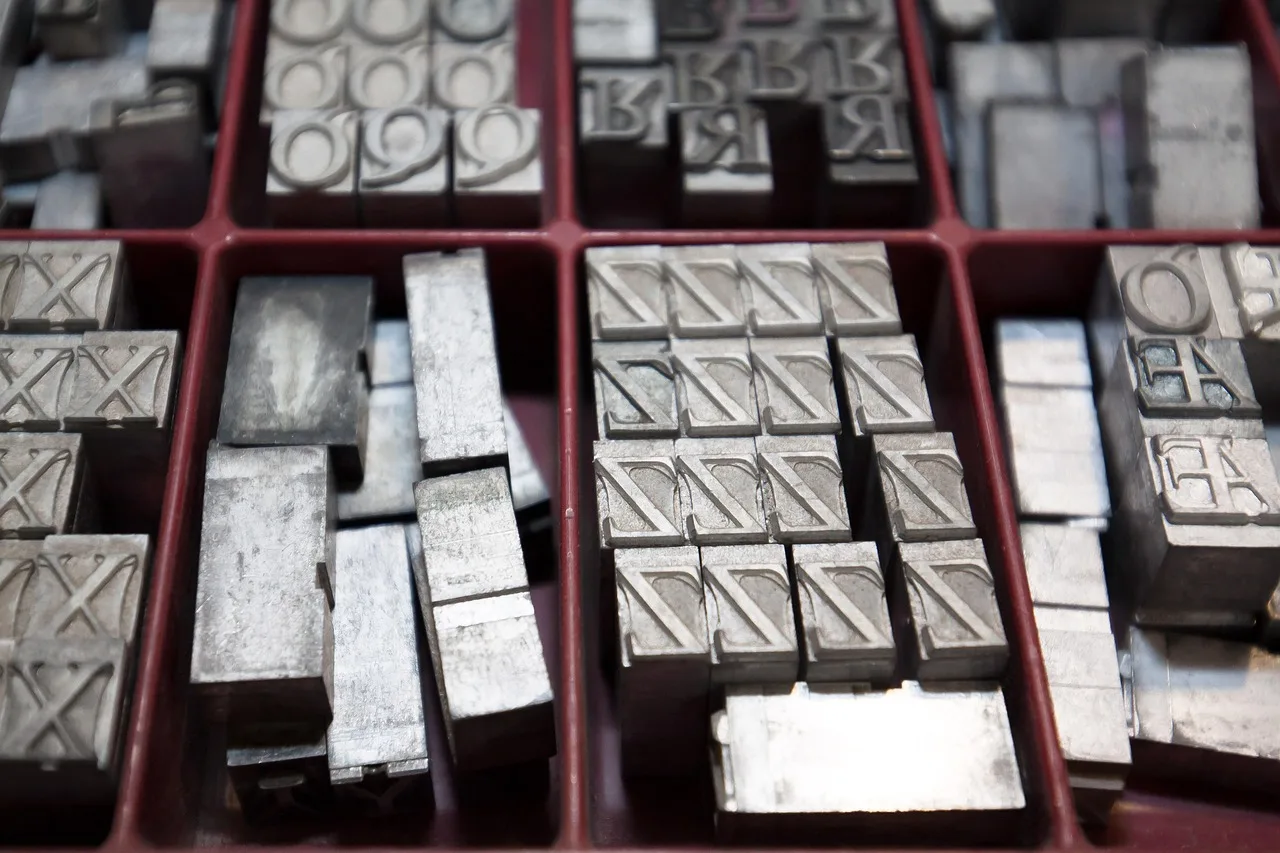
Two relief imprint methods sit behind most American wedding and stationery work. Letterpress presses a photopolymer plate into damp cotton paper and leaves a debossed impression. Foil stamping uses heat and pressure to transfer a metallic or pigment layer from a carrier film onto the sheet.
Trade printers sell both to retail shops, planners and studios that lack the equipment. Both carry a setup charge that does not shrink with the order. That single fact controls which method makes sense at 50 pieces and which makes sense at 500.
For background on the process itself, see the description of letterpress printing and the overview of foil stamping.
The criteria that matter
Letterpress
- Setup charge
- $75 to $150 per plate
- Minimum run
- Often 25 to 50 pieces
- Per-piece at 100
- $2.50 to $5.00
- Per-piece at 250
- $1.40 to $2.80
- Colors per pass
- One ink per pass
- Metallic finish
- Not possible in ink
- Paper
- Cotton, soft, textured
Foil stamping
- Setup charge
- $180 to $350 per die
- Minimum run
- Often 100 to 250 pieces
- Per-piece at 100
- $1.80 to $3.50
- Per-piece at 250
- $0.90 to $1.90
- Colors per pass
- One foil color per pass
- Metallic finish
- Native capability
- Paper
- Coated or smooth stocks
The dollar figures above are illustrative ranges drawn from published trade price lists, not quotes. Your printer's numbers will move with plate size, paper and press time.
Letterpress vs Foil Stamping
Letterpress
- Setup charge
- $75-$150 per plate
- Minimum run
- 25-50 pieces
- Per-piece at 100
- $2.50-$5.00
- Per-piece at 250
- $1.40-$2.80
- Colors per pass
- One ink
- Metallic finish
- Not possible
- Paper
- Cotton, textured
Foil stamping
- Setup charge
- $180-$350 per die
- Minimum run
- 100-250 pieces
- Per-piece at 100
- $1.80-$3.50
- Per-piece at 250
- $0.90-$1.90
- Colors per pass
- One foil color
- Metallic finish
- Native capability
- Paper
- Coated, smooth
Option by option
Letterpress setup is a photopolymer plate, usually $75 to $150 for an invitation panel. The plate is thin, cheap to remake and easy to store for reorders. A 50-piece run of a one-color invitation commonly lands near $4 to $6 per piece once setup is spread across the order. That is the number clients push back on.
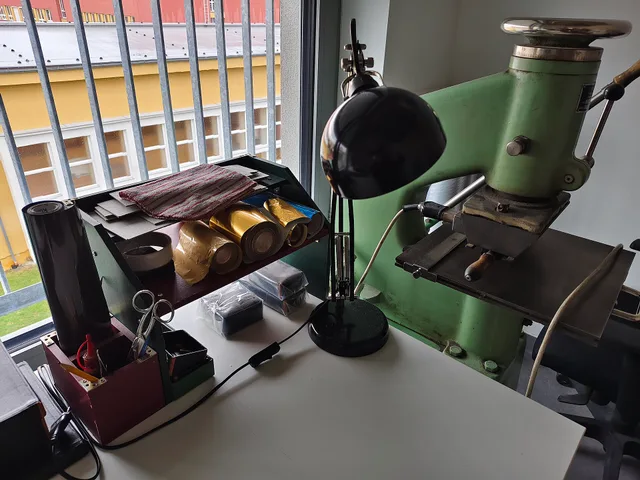
Foil stamping setup is a metal die, etched or engraved, typically $180 to $350. Dies last for years and thousands of impressions, so reorders carry almost no setup at all. The catch is the minimum. Many US trade foil shops will not run fewer than 100 pieces, and some set the floor at 250.
A common compromise is a two-pass job: letterpress the text, foil the monogram or border. That doubles setup and press passes, so it is usually reserved for runs above 150 pieces.
If you weigh bringing it in house, buying used imprint machinery from American trade printers and auctions covers what a used foil press costs to land and repair.
Where each one wins
Advantages
- Letterpress is right for a 40-piece elopement set on thick cotton stock with one ink color and a tight deadline.
- Letterpress is right when the client changes the wording twice, because a new plate is cheap.
Drawbacks
- Foil stamping is right for a 300-piece holiday card run where the client wants gold on navy and will reorder next year.
- Foil stamping is right when the artwork is locked and the die will be reused across three or four jobs.
If you are pricing both for a client, build the quote the same way every time so the comparison is honest. Sample print shop quotes and the template behind them for owner-operators shows one structure that keeps setup, stock and finishing on separate lines.
The setup charge math
- Get the setup charge for each method from your trade printer.
- Get the per-piece rate at 50, 100 and 250 pieces.
- Multiply the per-piece rate by quantity and add setup.
- Divide the total by quantity to get a true unit cost.
- Compare the two unit costs at the quantity the client actually ordered.
Run that math once and the crossover point becomes obvious. For a typical one-color invitation, letterpress is cheaper below roughly 100 pieces and foil pulls ahead somewhere between 150 and 250.
Setup Charge Math
- Get setup charge for each method
- Get per-piece rate at 50, 100, 250
- Multiply per-piece by quantity, add setup
- Divide total by quantity for unit cost
- Compare unit costs at ordered quantity
A die that costs $300 and runs 400 pieces adds $0.75 per piece in setup. The same die across 50 pieces adds $6.00 per piece before the press ever starts.
What none of them solve
Both methods share one hard limit: any change to the die line means a new plate or die, and that setup charge comes back in full. Moving a monogram two millimeters is not a tweak. It is a reorder of the tooling, and the client pays for it.
Neither method fixes bad paper: cotton stock with moisture will not hold a crisp impression, and curled coated stock will misregister under foil heat.
Storage conditions matter as much as the press. For shops in dry or damp markets, how paper storage and humidity control differ in Phoenix and Seattle explains why the same stock behaves differently by city.
There is also a compliance layer most small shops meet the first time they install a foil press. Heated platens and foil feed mechanisms need guarding and lockout procedures under the OSHA machine standards. If you are adding either method in house, OSHA and EPA compliance for small US print shops, explained plainly walks through the paperwork and the inspections.