
Guides
Twelve Real Print Shops: What Each Does, Who It Suits and Where It Breaks
Profiles of twelve named print shops, from Cimpress and MOO to Hatch Show Print, with what each does, who it suits and where the model breaks.
What to take away
- The twelve print shops below are real and named. Look up each one, read its site and send a quote request.
- Read them as models, not rankings. Each entry gives what the shop does, who it suits and how it charges.
- Most durable shops are narrow. They own one process, one customer type or one quantity range, and they partner the rest.
- Copy a model only after checking that your market has the demand pattern it needs.
- The five observable facts in the table below tell you more about a local competitor than any opinion does.
Twelve shops worth studying
Cimpress and Vistaprint: the online-first trade printer
Vistaprint sells business cards, signage and promotional goods to small businesses through a website. It has no counter and no local sales call. Its parent, Cimpress, runs the same model across several brands in different countries.
The commitment is specification discipline. Every order arrives as a file against a published template. The price is set before a human sees the job. That works only if templates are tight enough that nobody argues about them later.
It suits a shop that can build a preflight process and hold to it. It breaks when a customer wants to discuss a job, because there is no one to discuss it with.
MOO: the design-led short-run printer
MOO prints business cards, postcards and promotional pieces in small quantities. Its Printfinity option puts a different image on every card in a pack. MOO built its reputation on finish quality and print-ready design tools rather than on price.
The commitment is short runs priced as short runs, not as long runs quoted badly. A shop that copies the look without the pricing discipline loses money on every order.
It suits a market with designers, agencies and small brands nearby. It breaks when the finishing is outsourced and the partner is slow.
Smartpress: the trade printer that sells to designers
Smartpress, based in Chanhassen, Minnesota, sells print to designers, agencies and businesses rather than to walk-in retail customers. It publishes paper stocks, quantities and turnaround online. Orders arrive as files, and the company does not approach the designer's client.
The commitment is prepress excellence and one boundary: never contact the end client. One violation ends the relationship.
It suits a shop with strong prepress staff and no appetite for retail counter traffic. It breaks when the shop starts chasing the client directly.
Jakprints: the wide-format and apparel coordinator
Jakprints, in Cleveland, Ohio, prints signage, banners, display graphics and apparel decoration. It coordinates items it does not produce itself, so it manages outside schedules alongside its own.
The commitment is treating a partner's lead time as part of the promise, not as a footnote beside it. It breaks when the partner's delay lands after the customer has been told a date.
It suits a shop that already has storage and shipping space. It breaks when storage was never costed into the quote.
Modern Postcard: the mailing house with a press
Modern Postcard, in Carlsbad, California, prints postcards and direct mail pieces. It then addresses, sorts and delivers them to the postal service. Print and mailing are one order, not two.
The commitment is data handling discipline. Address lists arrive from customers and must be checked before printing, not after.
It suits a shop in a market with direct mail demand and a customer base that mails regularly. It breaks when an address file is processed after the run.
GLS Companies: the regional commercial printer
GLS Companies is based in Brooklyn Park, Minnesota. It runs these services under one roof:
GLS Companies
- offset presses
- digital presses
- mailing
- fulfillment
- wide format
It is the shape most regional commercial printers take: several processes, one sales team, one building.
The commitment is twice the capital and twice the skill base. It breaks when one process sits idle while carrying its own fixed costs.
It suits an owner with the capital for two processes and the management depth to keep both loaded. It breaks when the second process was added without a customer for it.
Hemlock Printers: the sustainability-led commercial printer
Hemlock Printers, in Burnaby, British Columbia, publishes its environmental certifications and its paper sourcing policy alongside its press list. Its Forest Stewardship Council chain-of-custody records are part of the sales pitch.
The commitment is documented sourcing and chain-of-custody records. That means knowing where every sheet came from.
It suits a market where buyers ask about paper sourcing. It breaks when the records cannot be produced on request.
Linemark: the large-format and mailing shop
Linemark, in Upper Marlboro, Maryland, runs digital and offset printing. It also runs large-format signage, mailing and fulfillment. Like GLS, it is a multi-process shop, but weighted toward large format and mail.
The commitment is substrate range and storage. Large-format stock comes in rolls and sheets that do not fit standard racks.
It suits a shop with warehouse space and a delivery vehicle. It breaks when large format is treated as an add-on to commercial print.
Mama's Sauce: the small-batch specialty printer
Mama's Sauce, in Orlando, Florida, prints short runs on specialty stocks with letterpress, foil and digital processes. It sells craft and unusual substrates rather than volume.
The commitment is knowing how difficult material behaves before quoting it. A shop that quotes an unfamiliar substrate at a familiar rate loses money on the job.
It suits a market with wedding, event and small-brand customers. It breaks when it prices by the hour it hoped for rather than the hour it takes.
Newspaper Club: the short-run newsprint printer
Newspaper Club, based in London and shipping internationally, prints short-run newspapers and booklets on newsprint for small publishers, events and campaigns. Its digital formats include broadsheet, tabloid and mini, and runs start at low quantities.
The commitment is a narrow format and a narrow quantity range, done well. It breaks when a customer asks for a size the shop does not run.
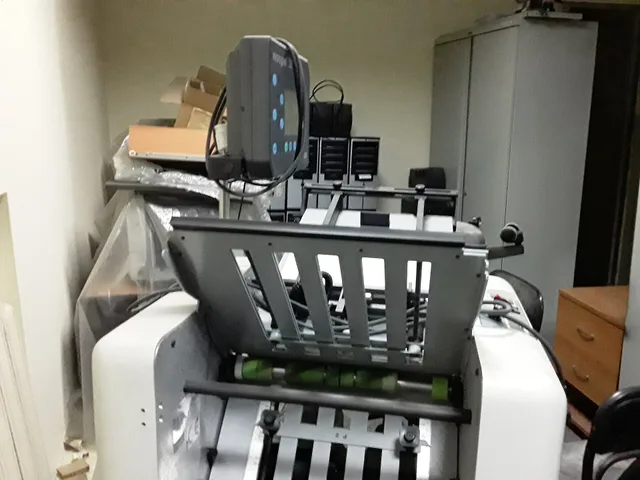
It suits a shop with a digital press and a folding line. It breaks when the format range widens without new equipment.
Publication Printers: the publication and catalog specialist
Publication Printers, in Denver, Colorado, prints magazines, catalogs and booklets in the quantities those products need. The work is multi-page, bound and mailed on a schedule.
The commitment is binding capacity and creep discipline. A bindery quoted as an afterthought is a bindery that misses the mail date.
It suits a shop with a saddle-stitcher or perfect binder and a mailing operation. It breaks when the bindery is the constraint and nobody has counted it.
Hatch Show Print: the storefront model
Hatch Show Print in Nashville, Tennessee, is a named example of the local storefront model. It prints letterpress posters, runs a counter and is operated by the Country Music Hall of Fame. Many markets still have one: a few presses, walk-in work and local business jobs.
The commitment is counter time, which competes directly with estimating time. It breaks when the counter consumes the day and the quotes go out late.
It suits an owner who wants to be in the shop and in the neighborhood. It breaks when the owner is the only person who can price a job.
How to study a shop near you
Opinions about competitors are worthless. These five facts are checkable, and each one tells you something.
| Observable | How to check it | What it tells you |
|---|---|---|
| Quantity range | Published prices or a quote request | Which processes they own and which they partner |
| Turnaround, and what it is measured from | Their own material, or asking | How disciplined their scheduling is |
| Menu breadth | Their site and their premises | Whether they specialized or spread |
| Response speed | Send a real inquiry | The most common weakness in this trade |
| Who refers them | Ask designers and adjacent trades | The referral network you would be entering |
The counting method behind a fuller market picture is in what a market can actually support.
Before copying a model
Three checks, in order.
Does your market have the demand pattern the model needs? A design trade printer needs designers within reach. A mailing house needs customers who mail monthly. Count before committing.
Can you produce it? Every model above implies machines, substrates and finishing. Check against what each press and finishing line can run and against where jobs currently wait, in how work moves through the shop.
What does it oblige you to? Some models bring specific duties: new chemistry, new storage, customer data or a regulated printed product.
Production safety and chemical duties start from OSHA's printing industry pages, and waste and permit questions belong to your state environmental agency.
The wider map of who governs what is in the compliance map for a print shop.
Staffing follows the model, since press, prepress and bindery are distinct skills with distinct local wage references, published in the occupational wage tables. For the general planning and growth sequence, the SBA business guide is the standard map. How the chosen model is then sold is the subject of how print is actually bought.
Common questions
Which of these shops is most profitable?
The question has no general answer, because profitability depends on your constraint, your market and your job mix. What the list shows is that the durable models are narrow ones.
Can a shop run more than one model?
Two at most, and only where they share machines and skills. GLS and Linemark run several processes, but each has a sales team and a building sized for it. Shops running four are usually running none of them well.
How do I study a shop I cannot visit?
Through the five observables in the table. Send an inquiry, read what they publish, and ask people who buy from them. That is more informative than anything written about them.
Is the franchise route worth considering?
It is a real option with real trade-offs: systems and brand support against fees and operating constraints. Assess it the same way as any model, by whether your local demand matches the standard offer, and take the agreement to a licensed attorney.